


Introduction
Tiger Balm is one of the most recognizable topical pain relief products in the world. For decades, people have relied on it to soothe muscle aches, headaches, joint pain, and even insect bites. Despite its popularity and long history, many people are surprised to learn that Tiger Balm has faced restrictions or bans in certain countries. This has led to a common question asked online and offline: why is tiger balm illegal in some regions while it is freely sold in others?
Understanding the answer requires looking beyond the brand name and examining the ingredients, safety regulations, health standards, and legal frameworks that differ from country to country. Tiger Balm is not universally illegal, but specific versions or formulations may violate local medical or consumer safety laws. This article explores the topic in depth, explaining the history of Tiger Balm, its composition, regulatory issues, and the real reasons behind the confusion surrounding its legality. By the end, readers will have a clear and balanced understanding of why is tiger balm illegal in some places and perfectly legal in others.
What Is Tiger Balm and Why Is It Popular

Tiger Balm is a topical ointment originally developed in Asia and widely used as a traditional remedy for pain relief. It is applied externally and is known for its strong scent and warming or cooling sensation on the skin. The product gained global popularity due to its fast-acting nature and natural ingredient profile, which appealed to people seeking alternatives to oral pain medication.
The popularity of Tiger Balm comes from its ability to provide temporary relief for common physical discomforts. Many users apply it for back pain, muscle stiffness, arthritis discomfort, headaches, and cold-related congestion. Over time, it became a household name, especially in Asian, Middle Eastern, and Western markets. However, popularity does not always guarantee universal legal acceptance, which brings us back to the recurring concern of why is tiger balm illegal in certain jurisdictions.
The Key Ingredients Found in Tiger Balm
To understand the legal challenges surrounding Tiger Balm, it is essential to examine its ingredients. Traditional formulations typically include camphor, menthol, cajuput oil, clove oil, and sometimes cassia oil. These ingredients are derived from natural sources and have long histories in traditional medicine.
Camphor is the most controversial ingredient when it comes to legality. While it is effective in relieving pain and improving circulation when applied externally, camphor can be toxic if ingested or used in excessive amounts. Different countries impose strict limits on camphor concentration in consumer products. When a Tiger Balm formulation exceeds these limits, it may be restricted or banned, which often leads people to ask why is tiger balm illegal without realizing that the issue is ingredient regulation rather than the brand itself.
Regulatory Differences Between Countries
One of the main reasons Tiger Balm faces legal challenges is the lack of unified global standards for topical medications. Each country has its own health authority that determines what ingredients are permitted and in what quantities. A product approved in one nation may fail to meet the regulatory criteria of another.
In some countries, Tiger Balm is classified as a traditional medicine, while in others it is treated as an over-the-counter drug. This classification affects how strictly it is regulated. When authorities decide that certain ingredients pose a potential health risk, they may impose restrictions or require reformulation. These differences are central to understanding why is tiger balm illegal in some regions but readily available elsewhere.
The Role of Camphor in Legal Restrictions
Camphor deserves special attention because it is the ingredient most often cited in regulatory concerns. High concentrations of camphor can cause skin irritation, allergic reactions, or more severe health issues if misused. For this reason, some countries strictly control or ban products containing camphor above a certain percentage.
Tiger Balm traditionally contains camphor levels that are acceptable in some markets but exceed limits in others. When a country enforces stricter safety thresholds, the product may be deemed non-compliant. This is one of the clearest explanations for why is tiger balm illegal in specific locations, even though millions of people use it safely worldwide.
Safety Concerns and Public Health Policies

Public health authorities are tasked with minimizing risks to consumers, even when those risks are relatively rare. If a product has the potential to be misused or cause harm under certain conditions, regulators may choose to err on the side of caution. This approach can result in bans or restrictions that confuse consumers familiar with the product’s benefits.
Tiger Balm is generally safe when used as directed, but concerns arise when it is applied to broken skin, used excessively, or ingested accidentally, particularly by children. Some governments respond to these risks by limiting access or requiring warning labels. When these requirements are not met, authorities may restrict sales, contributing to the ongoing debate about why is tiger balm illegal.
Table 1: Common Tiger Balm Ingredients and Regulatory Concerns
| Ingredient | Purpose in Product | Regulatory Concern |
|---|---|---|
| Camphor | Pain relief and circulation | Toxicity at high concentrations |
| Menthol | Cooling sensation | Skin sensitivity in some users |
| Clove Oil | Anti-inflammatory effects | Allergic reactions |
| Cajuput Oil | Muscle relaxation | Limited safety data in some regions |
| Cassia Oil | Warming effect | Skin irritation potential |
Misconceptions About Tiger Balm Bans
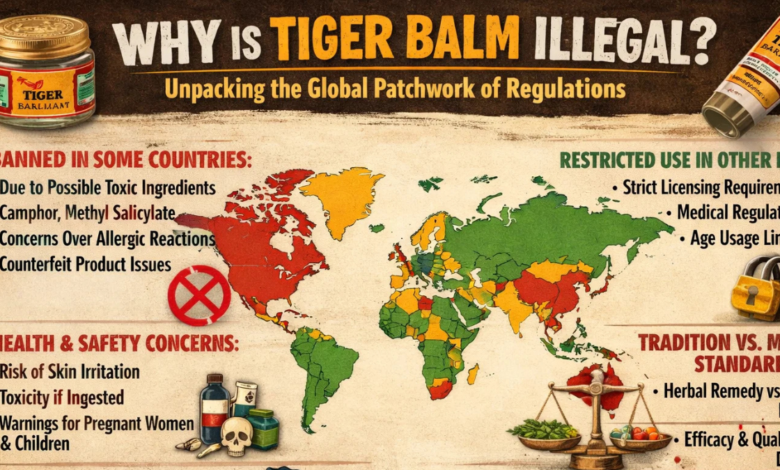
A common misconception is that Tiger Balm is completely illegal worldwide, which is not true. In most cases, only specific versions or formulations are restricted. Another misunderstanding is that the product is unsafe, despite decades of widespread use with relatively few reported issues.
These misconceptions fuel confusion and misinformation online, leading to exaggerated claims about bans and dangers. Understanding the nuances behind regulations helps clarify why is tiger balm illegal in certain cases without assuming the product is inherently harmful.
Differences Between Red, White, and Other Variants
Tiger Balm is available in multiple variants, including red, white, and other specialized formulas. Each variant contains different ingredient ratios, which can affect its legal status in various countries. For example, the red version often contains higher levels of camphor and cassia oil, making it more likely to face restrictions.
White Tiger Balm typically has a milder formulation and may be more easily approved in stricter regulatory environments. This distinction explains why some consumers can buy one version but not another, reinforcing the perception that tiger balm is banned without understanding the underlying reasons.
Import Laws and Customs Restrictions
Even in countries where Tiger Balm is legal, import laws can complicate its availability. Products purchased abroad may not comply with local labeling or formulation standards, leading customs authorities to seize or reject shipments. This often happens with personal imports ordered online.
Such incidents contribute to stories about bans and illegality, even when domestic versions are allowed. These situations further highlight why is tiger balm illegal in certain contexts, particularly when regulations apply to imported goods rather than locally approved products.
Table 2: Reasons Tiger Balm May Be Restricted
| Reason for Restriction | Explanation |
|---|---|
| Ingredient limits | Exceeds allowed camphor levels |
| Labeling issues | Missing required warnings |
| Product classification | Considered a drug instead of a cosmetic |
| Import compliance | Fails customs safety standards |
| Child safety concerns | Risk of accidental ingestion |
Cultural and Traditional Medicine Perspectives
In many Asian cultures, Tiger Balm is seen as a traditional remedy passed down through generations. Traditional medicine often operates under different assumptions than modern pharmaceutical regulation. When such products enter global markets, they must adapt to scientific and legal scrutiny.
This clash between traditional use and modern regulation plays a role in debates about why is tiger balm illegal. Authorities may require clinical evidence and standardized manufacturing processes that traditional products were never designed to meet.
Legal Status Versus Availability

It is important to distinguish between legal status and practical availability. A product may be legal but difficult to find due to regulatory hurdles, limited distribution, or reformulation requirements. Conversely, an illegal product may still be available through unofficial channels.
Understanding this distinction helps clarify consumer confusion. When people ask why is tiger balm illegal, they are often responding to availability issues rather than actual legal prohibitions.
The Impact of Reformulations
To comply with regulations, manufacturers sometimes reformulate products by reducing or removing certain ingredients. These reformulated versions may be approved in stricter markets while maintaining the brand identity.
Such changes demonstrate that the issue is not the concept of Tiger Balm itself but specific ingredient concentrations. Reformulation is one of the most effective solutions to concerns about why is tiger balm illegal in certain regions.
Consumer Responsibility and Proper Use
Regulators also consider how consumers use products in real-world conditions. Misuse, such as excessive application or use on children without guidance, increases the risk of adverse effects. Education and clear instructions can mitigate these risks.
When authorities believe that misuse is likely or that instructions are insufficient, they may restrict sales. This approach reinforces the importance of informed use and contributes to regulatory decisions surrounding Tiger Balm.
Why the Question Persists Online
The question of why is tiger balm illegal continues to trend online because of inconsistent information and anecdotal experiences. People share stories of products being confiscated or unavailable without understanding the legal context. Social media amplifies these stories, often without clarification.
Clear, factual explanations are essential to counter misinformation and help consumers make informed decisions. Understanding the legal landscape reduces unnecessary fear and confusion.
Conclusion
Tiger Balm is not universally illegal, nor is it inherently dangerous when used correctly. The reasons behind restrictions are rooted in regulatory standards, ingredient limits, public health policies, and import laws that vary widely between countries. The most significant factor is camphor concentration, which triggers stricter scrutiny in some regions.
By examining the product’s ingredients, regulatory frameworks, and cultural context, it becomes clear why is tiger balm illegal in certain places while remaining a trusted remedy elsewhere. Awareness and education are key to understanding these differences and navigating the global marketplace responsibly.
Read More:- Immigration Reform Explained: History, Policy, and Global Impact
