

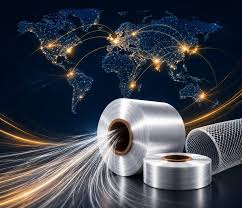
Synthetic fibers have become an essential part of modern manufacturing, supporting industries that require strength, durability, flexibility, and consistent performance. From sports equipment and industrial nets to filtration systems and specialized textile products, these materials offer practical solutions for a wide range of applications. As manufacturing requirements continue to evolve, selecting the right fiber is increasingly important for achieving product quality and operational efficiency.
Among the materials used in specialized industrial applications, monofilament yarn stands out for its single-filament structure, which provides useful properties such as dimensional stability, abrasion resistance, and consistent performance. Understanding how these materials work can help manufacturers make informed decisions when sourcing materials for different applications.
What Are Synthetic Fibers?
Synthetic fibers are manufactured using chemical compounds, typically derived from polymers, rather than being obtained directly from natural sources. Their properties can be engineered to meet specific performance requirements, making them suitable for applications where uniformity and reliability are essential.
Common synthetic fibers include nylon, polyester, polypropylene, and polyethylene. Each material offers distinct characteristics depending on its composition, manufacturing process, and intended use.
For example, nylon is valued for its toughness and abrasion resistance, while polyester offers good dimensional stability and resistance to moisture-related changes. Polypropylene is often selected for its lightweight nature and chemical resistance. The choice depends on factors such as operating conditions, mechanical stress, exposure to chemicals, and expected product lifespan.
Understanding Monofilament and Multifilament Structures
Synthetic yarns are commonly available in monofilament and multifilament forms. The main difference lies in their construction, which influences how they perform in specific applications.
Monofilament yarn consists of a single continuous filament. Its relatively simple structure can provide stiffness, shape retention, and resistance to abrasion, depending on the polymer and manufacturing specifications. These properties make it useful for applications such as sports nets, fishing nets, industrial mesh, and certain filtration products.
Multifilament yarn, on the other hand, consists of multiple fine filaments bundled together. This structure can offer greater flexibility, a softer texture, and different tensile and handling characteristics.
Neither structure is universally better than the other. Manufacturers should evaluate the intended application, required strength, flexibility, surface characteristics, and environmental exposure before choosing a suitable yarn.
Key Industrial Applications of Synthetic Fibers
Synthetic fibers support a wide variety of manufacturing processes and finished products.
- Sports and recreational equipment
Sports nets, racket strings, and other recreational products rely on materials that can withstand repeated mechanical stress. The appropriate fiber must offer suitable tensile strength, durability, and resistance to wear to support consistent performance.
- Industrial nets and mesh
Industrial nets are used in agriculture, construction, material handling, and safety applications. Synthetic fibers can provide the strength and durability needed for demanding operating environments. Selecting the correct yarn diameter, polymer, and construction helps manufacturers meet specific application requirements.
- Filtration and separation systems
Certain synthetic fibers are used in filtration fabrics and mesh systems designed to separate particles from liquids or gases. Factors such as opening size, chemical compatibility, dimensional stability, and operating temperature influence material selection.
- Agricultural applications
Synthetic yarns are used in agricultural nets, crop-support systems, and protective mesh. Their suitability depends on exposure to sunlight, moisture, environmental conditions, and the mechanical loads encountered during use.
- Specialized industrial products
Synthetic fibers also contribute to engineered textiles and components used in manufacturing, packaging, and other technical applications. The ability to select materials with specific physical properties makes them valuable across multiple sectors.
Factors to Consider When Selecting Synthetic Yarn
Choosing the right synthetic yarn requires more than comparing material names. Manufacturers should assess several technical factors before finalizing their specifications.
- Tensile strength: Determines how well the yarn withstands pulling forces during use.
- Abrasion resistance: Helps assess suitability for applications involving repeated friction.
- Flexibility and stiffness: Influences handling, product structure, and performance.
- Chemical resistance: Matters when the material comes into contact with oils, cleaning agents, or industrial chemicals.
- Environmental durability: Exposure to ultraviolet radiation, moisture, and temperature changes can affect service life.
- Consistency and quality control: Uniform diameter and dependable manufacturing specifications help maintain the quality of finished products.
Working with an experienced manufacturer can help businesses identify the appropriate material specifications and reduce the risk of selecting an unsuitable product.
The Importance of Reliable Manufacturing
The quality of a synthetic fiber depends not only on its raw material but also on the manufacturing process. Factors such as polymer selection, extrusion conditions, filament dimensions, cooling, and quality inspection can influence the final product’s characteristics.
Consistent production standards help manufacturers achieve predictable performance across batches. This is particularly important for industrial applications where yarn properties directly affect product strength, functionality, and service life.
Businesses sourcing technical fibers should consider supplier experience, product specifications, quality assurance practices, and the ability to meet application-specific requirements. Clear communication between the buyer and manufacturer also helps ensure that the selected material aligns with the intended use.
Conclusion
Synthetic fibers continue to play an important role in industrial manufacturing because they offer a combination of strength, versatility, and application-specific performance. Understanding the differences between polymer types and yarn structures allows manufacturers to choose materials that meet their technical and operational requirements.
For businesses looking for dependable material solutions, working with synthetic fiber & monofilament experts can be a valuable step toward identifying suitable products for specialized applications. Careful material selection, consistent manufacturing quality, and a clear understanding of end-use requirements all contribute to better product performance and long-term reliability.
