

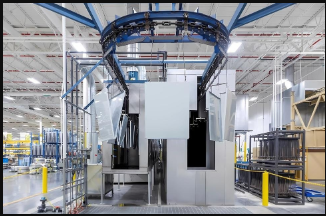
Finishing equipment makes the strongest business case when coating volume, scheduling pressure, or product requirements have outgrown the current process. Different manufacturers reach that point for different reasons, from rising outsourcing bills to oversized parts that outside vendors cannot turn quickly. Knowing which operations stand to gain the most helps a company judge whether bringing powder coating equipment into the plant is a practical production decision rather than simply another capital purchase.
Metal Fabricators That Keep Losing Time to Outside Finishing
Fabrication shops often feel the cost of outsourcing between welding and final assembly, where completed parts may sit waiting for pickup, coating, return freight, and inspection. Bringing recurring work in-house can remove several handoffs and give schedulers more control over when a job reaches the next department. Manufacturers comparing Reliant powder coating equipment for sale can review how many fabricated parts leave the building each month, how long they stay away, and what freight or rush charges follow them. Consistent internal volume makes the investment easier to justify because the equipment serves work already moving through the plant rather than depending on uncertain future demand.
OEMs That Need Finishing to Follow the Production Schedule
Original equipment manufacturers often have less tolerance for coating delays because finished panels, frames, brackets, and housings may feed directly into assembly. Delayed coated components can hold up a much larger product even when machining and fabrication finished on time. Reliant powder coating systems can help these operations bring application and curing closer to assembly so finishing follows plant priorities rather than an outside vendor’s queue.
Product consistency matters just as much for OEM work, especially where customers expect the same color, gloss, texture, and film build across repeated orders. Documented gun settings, rack layouts, cure profiles, and inspection checks give internal teams a repeatable process they can refine over time. Coordinated Reliant powder coating equipment also lets an OEM align booth capacity and oven output with the number of components its assembly lines actually consume.
Custom Coaters Handling Frequent Colors and Short Runs
Job shops and contract coaters face a different challenge because their value comes from handling changing parts rather than repeating one product all day. Fast color changes, flexible batch sizes, accessible booth surfaces, and practical rack arrangements matter more in that environment than raw line speed alone. Selecting a Reliant powder coating equipment package can suit this work by bringing the booth, curing equipment, controls, and supporting components into a layout designed around frequent changeovers and varied customer orders.
High-Mix Manufacturers With Constantly Changing Part Geometry
High-mix plants may process thin sheet in one batch and heavy welded assemblies in the next, making fixed assumptions about rack size, cure time, and loading patterns unreliable. Flexible powder coating equipment gives operators more room to adjust spray settings, rack arrangements, and production order without forcing every job through a process built around one dominant product. Shops with this type of workload can use Reliant powder coating ovens to handle different batch weights while keeping curing under the same controlled production process.
Thermal differences also deserve close attention because a lightweight enclosure and a dense steel bracket can reach the required part-metal temperature at very different rates. Profiling representative products gives supervisors practical cure recipes instead of encouraging unnecessarily long dwell times for every load. Properly selected Reliant powder curing ovens can provide the heating capacity and air circulation high-mix manufacturers need to manage those differences while keeping schedules flexible.
Heavy Fabricators Processing Large or Dense Assemblies
Oversized weldments, machinery frames, trailers, structural fabrications, and thick steel parts can be expensive and awkward to send elsewhere for finishing. Freight grows more complicated, handling damage becomes more likely, and the outside coater must have doors and ovens large enough for the work. Specifying a Reliant industrial powder coating oven can make sense for a manufacturer producing these components regularly because chamber dimensions, loading method, burner capacity, and airflow can be planned around the actual thermal load instead of a standard small-part batch.
Businesses With Enough Outsourced Volume to Bring the Work Home
Recurring outsourcing costs can signal that a shop already has the workload needed to support an internal finishing department. Accounting should look beyond invoice price and include transportation, packaging, minimum charges, rejected work, emergency orders, and production time lost while parts sit off-site. Buyers considering a Reliant powder coating oven for sale can compare those annual costs with equipment ownership, labor, utilities, maintenance, and the value of shorter internal lead times.
Scheduling control often becomes the less obvious return on investment. Internal coating allows a plant to prioritize a replacement part, prototype, rush order, or small batch without waiting for another company’s production calendar. Moving finishing closer to fabrication can also reduce work-in-process inventory because completed metal no longer needs to accumulate until there is enough volume to justify an outsourced shipment.
Growing Plants That Need Finishing Capacity Before the Next Bottleneck
Expansion can expose finishing limits quickly when new fabrication equipment raises output but coating capacity stays unchanged. Plants adding lasers, press brakes, welding cells, or new product lines should ask whether finishing can absorb the extra work before those upstream investments reach full production. Forward planning with Reliant powder coating equipment can prevent coating from becoming the stage where newly created capacity simply waits. For manufacturers already seeing unfinished parts stack up or outside finishing schedules stretch, Reliant Finishing Systems provides oven choices and equipment packages that can move that work closer to the machines producing it, giving growing shops a practical way to keep fabrication gains from being lost at the finish stage.
